Your subdomain is more than just a web address; it is your digital identity in 2026. This guide breaks down the professional science of choosing a name that is short, brandable, and optimized for Google Discover. We explore the “Radio Test,” the 15-character rule, and how to choose a subdomain that allows your blog to grow from a free project into a full-scale professional brand.
Why a Subdomain?
Starting with a subdomain (e.g., brand.wordpress.com) is the smartest way to launch with $0. It leverages the massive authority of the host platform, helping you get indexed by Google faster. As your traffic grows, you can “point” a custom .com domain to your existing content without losing your hard-earned SEO progress.
The Subdomain Trap: Why Your Blog’s Name Can Make or Break Your Growth
The digital landscape of 2026 is crowded, and attention is the rarest currency. Many new bloggers make the mistake of treating their blog name as an afterthought. They pick something like best-travel-blog-2026-v2.blogspot.com and wonder why no one returns to their site.
Your subdomain is more than just a URL; it’s a psychological trigger. It tells the reader—and Google, and other search engines—whether you are a serious professional or just another person testing the waters. In 2026, with the explosion of ‘micro-content,’ your name needs to be short, punchy, and ‘brandable.’ You want a name that people can type into a browser from memory after seeing it once on their Discover feed. Let’s dive into the professional strategy for picking a name that lasts.
How to Choose A Subdomain for Your Blog: Master Guide
Step 1: The “Discover” Factor (Mobile-First Clarity)
Google Discover and social feeds are visual environments. If your URL is too long, it gets truncated (cut off) on mobile screens, appearing as a broken string of letters that looks suspicious to users.
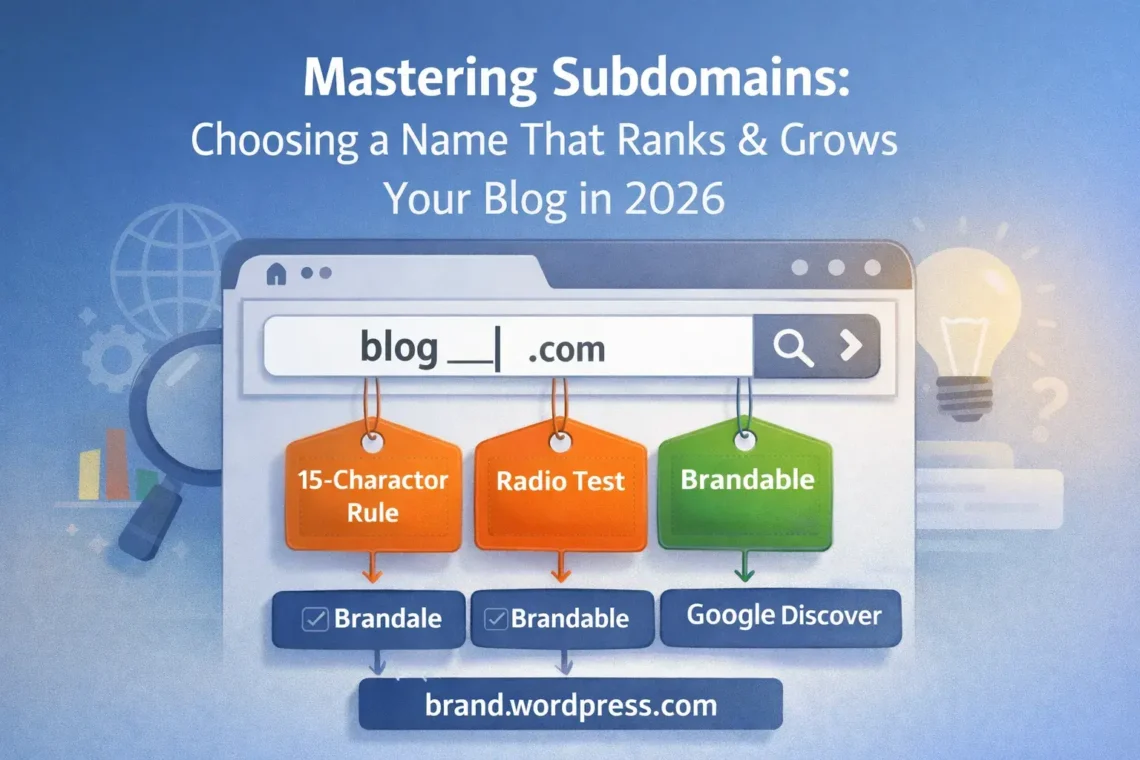
- The 15-Character Rule: Aim for a name under 15 characters before the platform extension. Shorter names are not only easier to remember but also fit perfectly within mobile UI layouts.
Example: PureLogic (9 characters) is far more effective than TheCompleteTechLogicGuide (26 characters).
- Eliminate Friction (Hyphens & Numbers): Symbols and numbers are “visual noise.” They make a URL look like a temporary or spammy site. A clean, alphabetic name suggests longevity and professionalism.
Example: DesignFocus (Premium) vs. Design-Focus-2026 (Dated/Amateur).
- The “Radio Test”: If you were to mention your blog name in a conversation or a podcast, would the listener know exactly how to spell it? If you have to explain the spelling, the name is too complex for viral growth.
Example: SkillLab (Passes) vs. SkillzLabz (Fails).
Read Also: How to Start a Blog for Free in 2026: A Comprehensive Guide for Beginners
Step 2: Niche Precision vs. Scalability
Your name needs to tell a story while leaving the door open for your brand’s evolution.
- The Keyword Integration: Using a broad “Power Word” helps search engines categorize your site instantly. It tells the reader exactly what value they will receive.
Example: If you are in the finance niche, WealthFlow is superior to JohnsNotes because it carries niche authority. - Personal Branding Strategy: If you are building a blog around your personal expertise, your name is your best asset. It is the only name that will never go out of style, even if you pivot your content.
Example: SarahWrites.wordpress.com remains relevant whether Sarah writes about AI today or philosophy tomorrow.
Step 3: Social Symmetry & Brand Protection
A professional blog doesn’t exist in a vacuum. It is part of a larger digital ecosystem.
- Omnichannel Availability: Before finalizing your subdomain, check if the same name is available on Instagram, X (Twitter), and LinkedIn. Total consistency across platforms is a hallmark of a high-tier professional.
- The “Copycat” Risk: Avoid choosing a name that is a slight variation of a major brand. You will never win the SEO battle against a giant, and you risk being flagged as a “spoof” site.
Example: Instead of TechCrunchy, go for something original like SiliconPulse.
Step 4: The Phonetics of Branding
Memorable brands often use linguistic patterns that “snap” in the reader’s mind.
- Alliteration: Using the same starting letter for two words creates a rhythmic effect that is naturally easier for the human brain to store.
Example: PixelPerfect, FinanceFix, GamingGuru.
- Power Verbs: Using action-oriented words creates a sense of purpose and progress.
Example: MasterCoding, BuildWealth, LaunchCreative.
FAQs Regarding How to Choose a Subdomain
Q: Does using a free subdomain make me look unprofessional?
A: Not if your content is high-quality. In 2026, readers care more about expertise and value than the URL. A clean, well-chosen subdomain (like Expertise.substack.com) can look just as professional as a custom domain.
Q: Can I use “Creative” spellings to find an available name?
A: Avoid this at all costs. Replacing “s” with “z” or “c” with “k” makes your site look like a “phishing” attempt. Stick to standard English spellings to maintain professional trust.
Q: What if my first choice or perfect name is taken?
A: Use a professional suffix like “Hub,” “Notes,” “Journal,” or “Daily.” Example: If FinanceExpert is taken, try FinanceExpertHub.
Q: Does a subdomain hurt my Google ranking?
A: Not directly. Google ranks quality content. However, a short, memorable subdomain improves your Click-Through Rate (CTR), which sends a positive signal to Google that your site is worth showing to more people.
Q: Should I include “2026” in my blog name?
A: Absolutely not. You want your blog to be relevant in 2027, 2028, and beyond. Keep the “2026” for your article titles, not your permanent URL. (e.g., “Best Cameras in 2026”), but keep your brand name evergreen.
Q: Does having a long subdomain hurt my SEO?
A: Directly? No. But indirectly, yes. Long URLs have lower Click-Through Rates (CTR). If people don’t click, Google thinks your content isn’t relevant and stops showing it in Discover.
Q: Can I change my subdomain later?
A: Technically, yes, but it’s a nightmare. You will lose all your social media shares and “backlink juice.” It is much better to spend 3 days picking the right name now than 3 months fixing a mistake later.