Most people believe $100 is too small for investing for beginners—and that myth is costing them years of wealth growth. Skip this, and you may delay the smartest financial decision of your life.
The biggest myth in the world of finance is that you need a “fortune” to start investing. In reality, the most successful investors didn’t start with millions; they started with a habit. As we move through 2026, the barriers to the financial markets have completely crumbled. Thanks to fractional shares, zero-commission apps, and robo-advisors, your $100 is now a powerful seed that can grow into a massive financial forest.
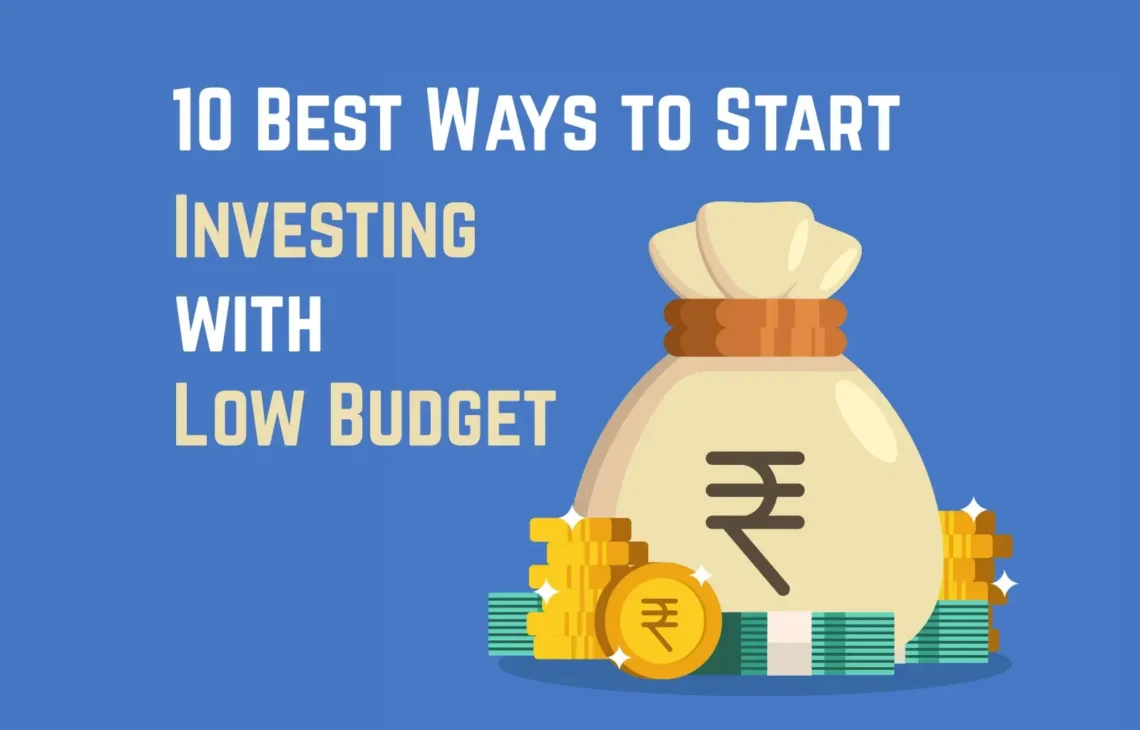
In this guide, we will break down the 10 most effective ways to invest $100 today and the exact strategy you need to follow to turn that small sum into long-term wealth.
The Psychology of Micro Investing for Beginners
Before we look at where to put your money, you must understand why $100 matters.
1. The Magic of Compounding
If you invest $100 and it grows by 10% annually, you might think, “It’s just $10 profit, what’s the point?” But if you add $100 every month for 30 years at that same rate, you end up with over $200,000. The $100 isn’t just money; it’s a “time machine” for your future self.
2. Low Stakes, High Learning
Investing $100 allows you to learn the “emotional” side of the market. You will see the numbers go up and down. Learning how to stay calm when your $100 becomes $95 is the best training you can get before you start dealing with $100,000.
The 10 Best Ways to Start or Suggest Investing for Beginners with $100
Here are ten distinct paths to suggest investing for beginners or to deploy your capital, ranging from safe havens to high-growth opportunities.
1. Fractional Shares of “Blue Chip” Stocks
In the past, you couldn’t buy a single share of a company like Amazon or Costco if it cost $500. Today, most brokers (like Robinhood or Fidelity) offer Fractional Shares.
How it works: You can buy $10 worth of 10 different companies.
Why for $100? It allows you to own a piece of the world’s most profitable giants without needing thousands of dollars.
2. S&P 500 Index Funds (The Gold Standard)
An Index Fund is a “bucket” that holds the 500 largest companies in the US.
The Benefit: By putting your $100 into an ETF like VOO (Vanguard S&P 500), you are instantly diversified. If one company fails, the other 499 carry the load.
Historical Return: Historically, the S&P 500 has returned an average of 10% per year.
3. High-Yield Savings Accounts (HYSA)
If you are risk-averse, this is your best starting point. In 2026, interest rates for high-yield savings accounts (HYSAs) remain attractive.
The Yield: You can earn 4.5% to 5% on your money with zero risk.
Liquidity: You can withdraw your $100 anytime if an emergency arises. It’s better than a regular bank account that pays 0.01%.
4. Micro-Investing & Round-Up Apps
Apps like Acorns are designed for the $100 investor.
Round-Ups: They link to your debit card. If you buy a sandwich for $9.20, the app rounds it to $10 and invests the $0.80.
The $100 Boost: Putting your initial $100 here gives your “spare change” a head start to start compounding.
You May Read Also: How to Improve Your Credit Score Fast: The Ultimate Guide to Financial Credibility
5. Dividend Reinvestment Plans (DRIPs)
Some companies pay you a “thank you” check just for owning their stock—this is a dividend.
The Strategy: Invest your $100 in a “Dividend Aristocrat” (companies that have paid dividends for 25+ years).
The Growth: Use a DRIP to automatically buy more shares with your dividend payout. It’s a self-growing machine.
6. Target Date Funds (The “Lazy” Investor’s Dream)
If you don’t want to manage your money, Target Date Funds are perfect.
How it works: You pick the year you want to retire (e.g., 2055). The fund automatically shifts from “Aggressive” to “Safe” as you get older.
Starting Small: Many mutual fund companies have lowered their minimums to $0 or $100 to attract new investors.
7. Real Estate Crowdfunding (REITs)
You don’t need $100,000 for a down payment to be a landlord.
Platform: Apps like Fundrise allow you to invest $100 into a massive portfolio of apartment complexes and commercial buildings.
Earnings: You get a share of the rent collected and the property appreciation.
8. Treasury Bills (Government-Backed Security)
In 2026, T-Bills are a “flight to safety.”
Safety: You are literally lending money to the US Government. It is the safest investment on earth.
Entry: You can buy them through TreasuryDirect in increments of $100.
9. Education & Self-Investment (The Highest ROI)
Sometimes the best place for $100 isn’t the stock market—it’s your brain.
Example: Buying a specialized certification course on Coursera or a set of 5 high-impact finance books.
The Return: If a $100 course helps you get a $5,000 raise at work, that is a 5000% return—something no stock can match.
10. ESG and Thematic ETFs
Want to invest in things you care about? Thematic ETFs focus on specific sectors like Clean Energy, AI, or Robotics.
Personalization: You can put your $100 into a “Future of Food” or “Space Exploration” ETF. It makes investing exciting and keeps you engaged with the news.
The Step-by-Step Action Plan
Step 1: Eliminate Toxic Debt If you have a credit card debt with 24% interest, paying that off with your $100 is an immediate 24% “return” on your money. No investment is better than that.
Step 2: Choose Your Brokerage In 2026, look for:
- Zero Commissions: Don’t pay $5 to trade.
- Fractional Shares: Essential for the $100 budget.
Step 3: Automate the Process The secret isn’t the first $100; it’s the next $100. Set up an “Auto-Invest” feature to pull $25 from your paycheck every week.
Common Pitfalls for Beginners to Avoid
Chasing “Meme” Stocks: Don’t put your $100 into a “get rich quick” coin or a viral stock. You are building a foundation, not gambling.
Checking the Price Every Hour: Investing is like watching grass grow. If you look too often, you’ll get anxious and sell at the wrong time.
Ignoring Fees: Even a 1% fee can eat thousands of dollars over time. Look for Expense Ratios below 0.10%.
Conclusion: Your Journey Starts Today
Investing for beginners with $100 is an act of bravery. It is a declaration that you believe in your future. By choosing one of the 10 ways mentioned above—whether it’s a diversified S&P 500 index or a fractional share of your favorite tech giant—you are moving from a “consumer” to an “owner.”
In 2026, wealth is built through consistency, not luck. Start with your $100 today, keep adding to it, and let time do the heavy lifting.